
Sunday, January 07, 2018
Roxy Music: the LPs (Cover art)
On the Music Graffiti website they are now available in large format, accurately taken directly from the originals, of the formidable cover images of the LPs of The Roxy Music of Brian Ferry, Phil Manzanera, Andy Mackay and Brian Eno, from 1972 to 1980.

Friday, February 14, 2014
The Beatles albums cover art
Many new images on Music-Graffiti website taken from the albums of The Beatles. Original images, scanned directly form the original LPs, previously not available on the Internet or not available in full size and high quality as these ones. The albums are Help! (1965), Rubber Soul (1966), Revolver (1966, many images), Abbey Road (1969). The index is here.


Saturday, February 01, 2014
Complete Lyrics by Album: Joan Armatrading
It's now available on Music-Graffiti website the complete lyrics, organized by album and with many comments and notes, of the official albums of the songwriter Anglo-Caribbean Joan Armatrading, from 1975 to 1995.


You can also listen to a couple oh Joan's classic ballads, from our YouTube channel
Friday, November 22, 2013
Forrest Gump
Forrest Gump is perhaps a metaphor of the pure American man, not distracted by the doubts that come from the knowledge (and intelligence), as, instead, is the case of his girlfriend Jenny, and therefore winner. Or, maybe, it's instead an ironic mockery of the American myth, where anyone can become president, or at least successful entrepreneur, even if starting from scratch, but on condition that he will be totally gullible and he will follows the instructions without ask any questions.
To remember and to view by images this masterpiece of American cinema, on Music-Graffiti it's available the complete soundtrack linked to each moment in the movie and now also a selection of the best snapshots taken directly from the film.


To remember and to view by images this masterpiece of American cinema, on Music-Graffiti it's available the complete soundtrack linked to each moment in the movie and now also a selection of the best snapshots taken directly from the film.


Thursday, October 31, 2013
Complete lyrics by album: Jefferson Airplane
Now available on Music-Graffiti website the complete lyrics, with comments and organized by album, of The Jefferson Airplane official albums, from 1966 to 1972, plus the solo albums of Paul Kantner, Grace Slick and Jorma Kaukonen from 1970 to 1974. The complete discography with links is available here.

Friday, May 24, 2013
Miles Davis cover art on Music-Graffiti website
On the web site Music-Graffiti is now available a reproduction of album covers of the almost all the albums of Miles Davis, starting from late 40s. All the images are originals and they are taken from the original LP or CD. The complete discography of the great musician and band leader, organized by period, is also available on the website.
 |
| See the page of the CD covers |
 |
| See the page of the booklet of Milestones |
 |
| See the page dedicated to LP cover art |
 |
| See many other images |
Saturday, April 13, 2013
Dexter Gordon's Album Covers
On the web site Music-Graffiti is now available a selection of album covers of the most important albums of the great american musician and saxophone player. All the images are
originals and they are taken from the original LP or CD.


Sunday, January 20, 2013
Return to Vinyl
Is the old vinyl coming back? Wit ill be the classic black disc, the microgroove, the long-playing, the LP, that was declared obsolete already in the 80s, the legendary "successor of the CD", the magic object that music industry has not yet found to overcome the long period of decline in the market of music on physical media?
It's unlikely that this will be a mass phenomenon, but vinyl and turntables are back in the shops, and that this is a good way to listen good music.
A new dedicated page of our site Music-Graffiti, the English version of the well known Italian website Musica & Memoria, is dedicated to some suggestions on products that can be a starting point (or even an end point) in the analog music world. Including these ones.
A new dedicated page of our site Music-Graffiti, the English version of the well known Italian website Musica & Memoria, is dedicated to some suggestions on products that can be a starting point (or even an end point) in the analog music world. Including these ones.
 |
Pro-Ject RPM-9 |
 |
| Michell Gyro SE |
Tuesday, January 15, 2013
Top-5 LP cover art
One of the reasons that convinced the boys in the 70s to buy a vinyl LP was represented by its cover. Originally it was only a protection for the vinyl record inside. But in the '60s, first in jazz and then, even more, in the rock, the cover has become a specific form of art. Reaching the maximum with the great gatefold covers, that led to a unique conclusion: you could not miss to buy that LP. It's very difficult to choose the most beautiful, those with the greatest impact. But in Music-Graffiti website we try to list our personal Top-5 that can be read in this new page (with all the cover art selected in full format).


Sunday, January 13, 2013
Top-5 Italian Songs Translated in English
Five wonderful Italian songs to be discovered on YouTube
or iTunes. The Top-5 of the last decades in the opinion of Music-Graffiti website, and almost unknown outside Italy.
Translation and comments on Music-Graffiti. The list:

Translation and comments on Music-Graffiti. The list:
- La cura - Franco Battiato (Battiato, M. Sgalambro, 1996)
- Se telefonando - Mina (E. Morricone, M. Costanzo, 1966)
- Quello che le donne non dicono - Fiorella Mannoia (M. Ruggeri, 1987)
- Pescatore - Pierangelo Bertoli & Fiorella Mannoia (P. Bertoli, 1980)
- Samarcanda - Roberto Vecchioni (R. Vecchioni, 1977)
 |
| Fiorella Mannoia |
 |
| Fiorella Mannoia |
 |
| Samarcanda: Introduction |
 |
| Mina Mazzini |
Saturday, May 21, 2011
High Fidelity
From the novel by Nick Hornby the film by Stephen Frears, starring John Cusack and Iben Hjejle (nothing so exotic, she's a Danish actress) plus Lisa Bonet , Catherine Zeta-Jones and Jack Black as other main characters (Marie, Charlie and Barry). The love for music is one of the main themes of this movie, accordingly with the novel. And the other main theme is the desire to remain "forever young". Not unusual themes, but the structure of the film (and of the novel) is original, all around the obsession to make a "best of ..." about everything.

On Music-Graffiti website you can read the comments, the soundtracks listing of the film and also the "soundtrack" of the original novel of Nick Hornby (61 songs, plus many images taken directly by the film.
High Fidelity - Stephen Frears (2000).


From the top: Jack Black, Todd Louiso, John Cusack, Lisa Bonet, Catherine Zeta-Jones, Iben Hjejle, Joan Cusack

On Music-Graffiti website you can read the comments, the soundtracks listing of the film and also the "soundtrack" of the original novel of Nick Hornby (61 songs, plus many images taken directly by the film.


From the top: Jack Black, Todd Louiso, John Cusack, Lisa Bonet, Catherine Zeta-Jones, Iben Hjejle, Joan Cusack
Thursday, January 20, 2011
2001 A Space Odyssey
A well-known science fiction movies, very important and formerly known and seen by almost everyone, even many times. Now, not so much partially because a real big screen is needed to appreciate it and because a focused and comprehensive vision is needed to capture images, sounds and sensations, rather than understand completely the story.
The film had also a great importance in the evolution of musical taste, raising the focus on classical music that became almost a mass phenomenon during the seventies. For this we want to comment on the famous soundtrack.
But what have been the topics of this famous film? We try to do a summary on Music-Graffiti website.


The film had also a great importance in the evolution of musical taste, raising the focus on classical music that became almost a mass phenomenon during the seventies. For this we want to comment on the famous soundtrack.
But what have been the topics of this famous film? We try to do a summary on Music-Graffiti website.


Wednesday, October 20, 2010
Blues Brothers 2000
Director John Landis after some weak successes and his accomplice Dan Aykroyd (coauthor also in the previous movie) decided to give a following, 20 years after, to their first memorable chapter of Blues Brothers saga, despite the premature death of the main engine of the film, obviously, John Belushi. A double risk, then. Watching this film, actually, it seems that their first intent was the willing to live again the fun and to recreate the magic atmosphere of 1980, even if they were conscious that it would have been a very difficult task.

The joy to play and show the blues involved more or less of the world of the blues, so the most noticeable thing of this sequel is the large number of appearances, including Eric Clapton and BB. King

Stevie Winwood and Dr. John


Koko Taylor and Erikah Badou


And many many others.

You can read the summary, the soundtrack listing, the complete list of characters and interpreters and see many images from the movie Blues Brothers 2000 on Music-Graffiti website.

The joy to play and show the blues involved more or less of the world of the blues, so the most noticeable thing of this sequel is the large number of appearances, including Eric Clapton and BB. King

Stevie Winwood and Dr. John


Koko Taylor and Erikah Badou


And many many others.

You can read the summary, the soundtrack listing, the complete list of characters and interpreters and see many images from the movie Blues Brothers 2000 on Music-Graffiti website.
Thursday, April 08, 2010
Blues Brothers 1980
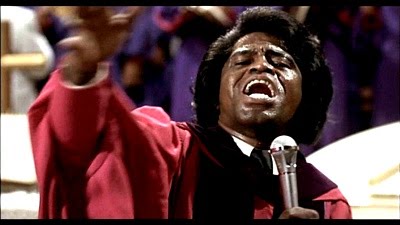
A road movie, a modern musical, a prototype for many others movies, the film of John Landis is completely full of pure blues spirit, together with his derivatives genres rhythm & blues, rock and soul, including even a short and funny excursion into the country & western genre. The plot is a sort of pretext, it's quite a joke, as in the previous movie of Landis, Animal House, where the energy and the transgression of the great John Belushi were presented for the first time. A straight man for Belushi was necessary this time, and the choice made by John Landis would have been the best one possible. Dan Aykroad was at that time a young and versatile actor, but he added to the film his still unknown talent in dance and interpretation and his particular absolutely emotionless approach. Apart that, Dan Aykroyd was also co-author of the screenplay. The third ingredient was the look, an immediate recognition for the two "brothers", very simple and a little bit unusual on 1980: black suit, black tie, white shirt, black hat, Ray-Ban black eye-glasses, the Blues Brothers had arrived and they would never leave us.

Plot summary, characters, cast, commented soundtrack and many images taken directly from the movie can be read and viewed on Music-Graffiti website, in the page dedicated to the mythical film of John Landis, The Blues Brothers (1980).


Plot summary, characters, cast, commented soundtrack and many images taken directly from the movie can be read and viewed on Music-Graffiti website, in the page dedicated to the mythical film of John Landis, The Blues Brothers (1980).

Monday, March 08, 2010
Animal House Soundtrack
A cult movie, a prototype for the "college" genre and the first appearance of a nonconformist and brutal character, the student (?) John "Bluto" Blutarsky, interpreted by John Belushi, soon after again with director John Landis in Blues Brothers, with the very similar character Jakie Blues. The movie starts as a parody of the well known fictions and films about the 50s and 60s years, seen as the "age of innocence" before the 1968 (or the 1963, the year of JFK assassination), as Happy Days or American Graffiti, the George Lucas movie of 1973.

The story is quite simple and it's based around two "fresher", Pinto (Tom Hulce) and Flounder (the nickname decided by Bluto (Stephen Furst). They have to choice the club, and they started from the good boys' one, Omega it's the name. They are gently invited to remain apart with other unlucky members, and they decided so to try another club, the rival of Omega, the Delta club. A total chaos, strange guys (as Bluto), they are aware that they are going probably to meet several troubles, but it's too much funny, and so they join the Delta.

The remaining of the story is based on the rivality of the two clubs and the actions they invent to defy the "enemy". In this way the other characters are presented: the conscious epicurean Otter (Tim Matheson), the girl of the Delta Katy (Karen Allen) and her boy-friend Boon (Peter Reiter), room mate and accomplice of Otter, the mad biker D-Day (Bruce McGill), Hoover, the president of the Delta Club, the teacher Jennings, interpreted by Donald Sutherland, marijuana smoker and very much interested to Katy, and the rivals, the perfect american boys Neidermeyer and Marmalard and their girls Mandy and Babs, very much appreciated by Bluto and by the other Delta guys.

Delta boys' jokes and transgressions can be read as a reaction to the fifties habits or, more simply, as the consciousness to be the new generation, with new habits and no respect for the old ones. And the perfect representation of the new era is the famous Toga party, no limits, no respect, zero tolerance for the high-minded feelings.

The parade in the town nearby the college is the final apotheosis of the movie, a real battle between the two clubs involving all the population, with Bluto dressed as the pirates and that howls "no prisoners!" and moreover the maximum offense to the spirit of the early sixties, racial integration and other high ideals, the black and white hands separating together (more realistically).

The best gags are the final ones, as in American Graffiti the spectators are informed about the adult life of all these boys and girls, and we learn so how much the real life is full of surprises.
You can read the complete soundtrack, a summary of the plot, a selection of images captured by the movie, the characters, the interpreters, on Music-Graffiti website.

The story is quite simple and it's based around two "fresher", Pinto (Tom Hulce) and Flounder (the nickname decided by Bluto (Stephen Furst). They have to choice the club, and they started from the good boys' one, Omega it's the name. They are gently invited to remain apart with other unlucky members, and they decided so to try another club, the rival of Omega, the Delta club. A total chaos, strange guys (as Bluto), they are aware that they are going probably to meet several troubles, but it's too much funny, and so they join the Delta.

The remaining of the story is based on the rivality of the two clubs and the actions they invent to defy the "enemy". In this way the other characters are presented: the conscious epicurean Otter (Tim Matheson), the girl of the Delta Katy (Karen Allen) and her boy-friend Boon (Peter Reiter), room mate and accomplice of Otter, the mad biker D-Day (Bruce McGill), Hoover, the president of the Delta Club, the teacher Jennings, interpreted by Donald Sutherland, marijuana smoker and very much interested to Katy, and the rivals, the perfect american boys Neidermeyer and Marmalard and their girls Mandy and Babs, very much appreciated by Bluto and by the other Delta guys.

Delta boys' jokes and transgressions can be read as a reaction to the fifties habits or, more simply, as the consciousness to be the new generation, with new habits and no respect for the old ones. And the perfect representation of the new era is the famous Toga party, no limits, no respect, zero tolerance for the high-minded feelings.

The parade in the town nearby the college is the final apotheosis of the movie, a real battle between the two clubs involving all the population, with Bluto dressed as the pirates and that howls "no prisoners!" and moreover the maximum offense to the spirit of the early sixties, racial integration and other high ideals, the black and white hands separating together (more realistically).

The best gags are the final ones, as in American Graffiti the spectators are informed about the adult life of all these boys and girls, and we learn so how much the real life is full of surprises.
You can read the complete soundtrack, a summary of the plot, a selection of images captured by the movie, the characters, the interpreters, on Music-Graffiti website.
Subscribe to:
Posts (Atom)
